
The social model of disability is a conceptual framework developed by disabled people. It challenges the traditional understanding of disability. Rather than viewing disability as an individual medical condition or personal problem, the social model explains that society creates disability through physical, organisational, and attitudinal barriers. When people design environments, services, and attitudes to be accessible, many of the disadvantages linked to impairment disappear.
Importantly, the social model draws a clear distinction between impairment and disability. Impairment describes a person’s physical, sensory, cognitive, or mental difference. Disability, however, is the result of society failing to accommodate those differences. In other words, people have impairments, but society disables them.
Origins and Context
The model began during the disability rights movement of the 1960s and 1970s. At that time, disabled people protested discrimination and exclusion from education, employment, and public life. As a result, activists and academics developed the social model in response to the medical model of disability.
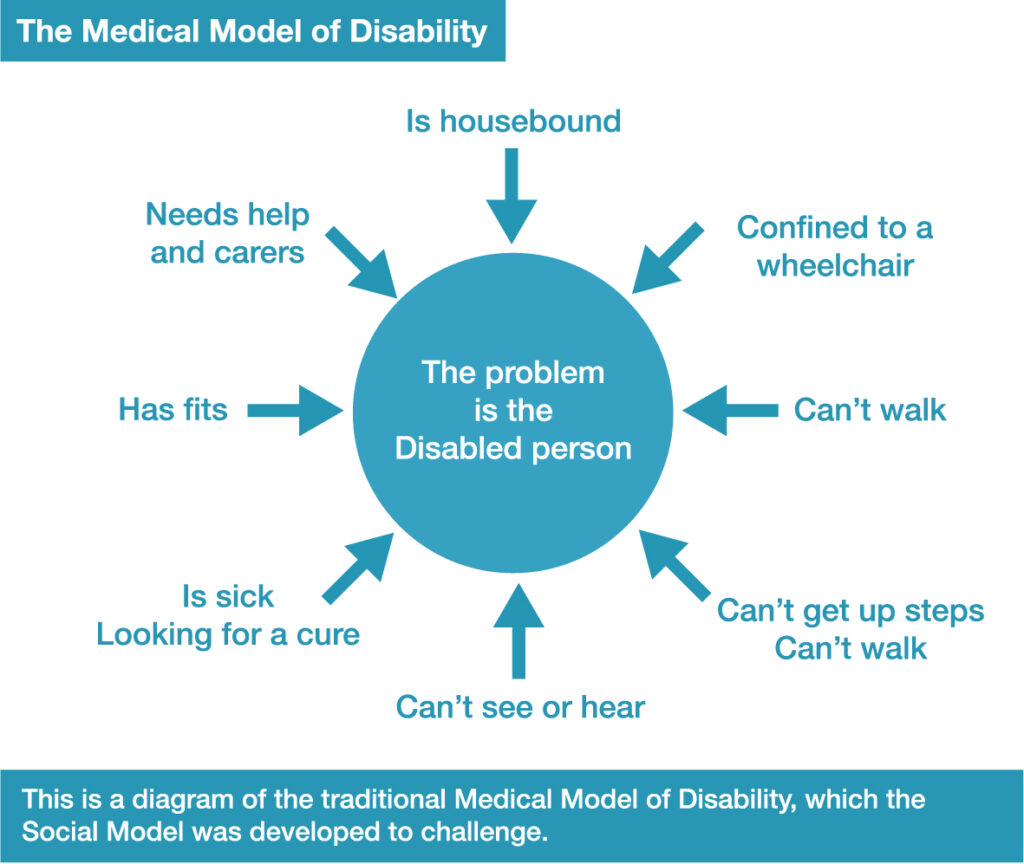
The medical model of disability views it as a problem within the individual that needs treatment or correction. By contrast, the social model places responsibility on society. It calls on organisations, governments, and communities to remove barriers and create inclusive environments.
Barriers That Disable
The social model identifies several types of barriers that prevent equal participation. These include:
- Physical barriers – inaccessible buildings, transport, or information formats
- Communication barriers – information or services not designed for different sensory or cognitive needs
- Attitudinal barriers – stereotypes, prejudice, or assumptions about capability
- Institutional barriers – organisational systems, policies, or structures that exclude
When organisations recognise these barriers, they can take action to remove them. As a result, disabled people gain greater independence, choice, and control over their lives.
Language and Identity
Language also plays a crucial role in how people understand disability. Historically, some terms reflected charitable or medical assumptions. However, the social model encourages language that promotes dignity, equality, and empowerment.
From this perspective, the term “disabled” reflects a shared social and political identity. It recognises that people have impairments, yet society disables them through barriers. At the same time, the model respects personal preference. Therefore, it highlights the importance of listening to the language individuals choose for themselves.
Everyday Play Application
Organisations applying the social model focus on removing barriers rather than attempting to “fix” the disabled Organisations that apply the social model focus on removing barriers instead of trying to “fix” the disabled person. For example, they improve accessibility, communication, and independence. Consequently, equality and inclusion become central design principles.
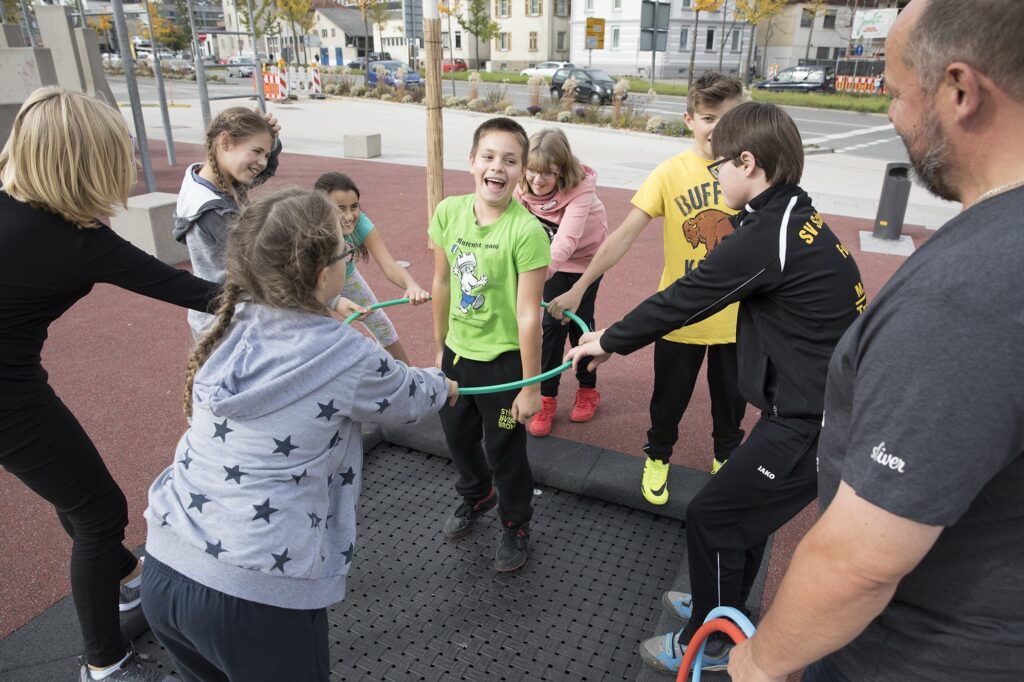
In child settings such as playgrounds, applying the social model ensures that everyone can access the same experiences and benefits. Inclusive playgrounds and equipment allow children, families, and communities to play together.
For instance:
- An inaccessible playground disables a wheelchair user.
- An unreadable sign disables a visually impaired person.
- Stereotypes limit opportunities for certain groups.
When communities remove these barriers, everyone benefits. This principle underpins the ethos of Inclusive Play, which promotes play experiences that are accessible to all ages and abilities.
Social Model vs Medical Model
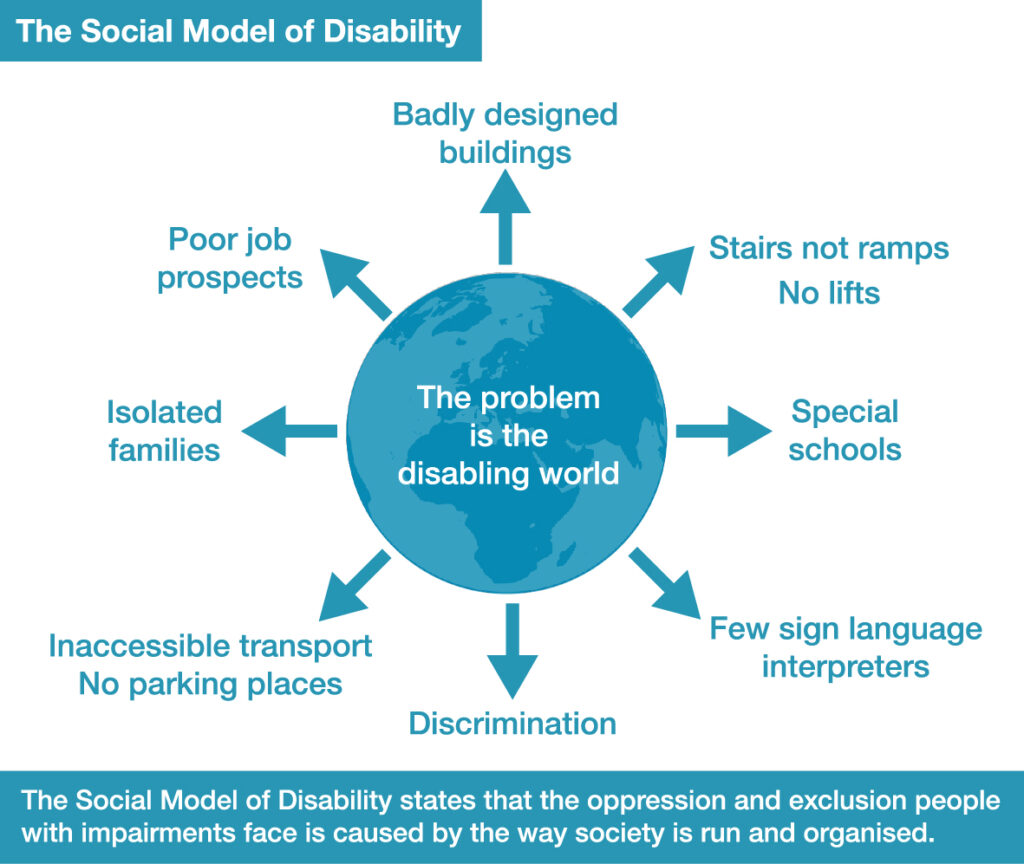
The difference between models becomes clearer when viewed side by side. The medical model focuses on what is “wrong” with the person. In contrast, the social model focuses on what needs to change in society.
Because of this shift in perspective, the social model supports long-term social change rather than individual correction.
Ongoing Relevance
Although many organisations widely adopt the social model, people do not experience or interpret it in exactly the same way. Some individuals prefer alternative frameworks or personal descriptions of disability. Nevertheless, the social model remains central to disability rights discussions. It continues to emphasise systemic responsibility and collective action.
Furthermore, introducing the model at an early age fosters understanding and acceptance. When children grow up in inclusive environments, they learn that everyone deserves equal access to opportunities.
Conclusion
Overall, the social model of disability offers a powerful and practical approach. Instead of treating disability as an individual issue, it recognises disability as a societal responsibility. Its focus on accessibility, equality, and inclusive language provides a strong foundation for meaningful change.
At the heart of our work, the social model guides our mission to create inclusive play products and spaces. We aim to make its principles the norm. Ultimately, we want everyone, regardless of ability, to enjoy shared experiences and opportunities.

References:
Social Model of Disability: Language | Disability Rights UK
The Social Model of Disability – Inclusion London
The social model of disability – Sense
Social model of disability | Disability charity Scope UK