
In an increasingly structured world of timetables, targets and touchscreens, the simple act of free play has never been more important. Free play is unstructured, self-directed play where children choose what and how to play without adult direction, fostering creativity, independence and development. As highlighted by organisations such as the National Institute for Play, it is a biological necessity and a cornerstone of healthy development.
Far from being “just play”, free play shapes children’s brains, strengthens relationships and builds the foundations for lifelong wellbeing.
Meeting Foundational Psychological Needs
Psychological research consistently shows that human wellbeing rests on three core needs: autonomy, competence and relatedness. Free play uniquely supports all three.
Autonomy develops when children make their own choices — deciding what to play, how to play and with whom. Unlike adult-led activities, free play gives children control over their environment and experiences.
Competence grows as children test their abilities. Whether climbing, building, negotiating rules or inventing games, they learn through trial and error. Success boosts confidence; setbacks build resilience.
Relatedness emerges as children connect with peers. Cooperative games, imaginative role-play and shared adventures strengthen bonds and foster a sense of belonging.
When these psychological needs are met consistently, children experience greater emotional security and overall wellbeing.

Brain Development and Executive Functioning

Free play does not simply entertain the mind — it actively builds it.
Research indicates that playful activity stimulates brain development at molecular, cellular and behavioural levels. It enhances neural growth and connectivity, particularly in areas responsible for executive functioning, which are the mental skills that help us plan, focus attention, remember instructions and manage multiple tasks.
One key biological mechanism involved is the increase of brain-derived neurotrophic factor (BDNF), a protein that supports the survival and growth of neurons. Elevated BDNF levels are associated with improved learning capacity, adaptability and prosocial behaviour.
Through playful exploration, children strengthen neural pathways that underpin problem-solving, self-regulation and flexible thinking. These executive skills are critical not only for academic success but also for navigating life’s challenges.
Physical and Social Benefits
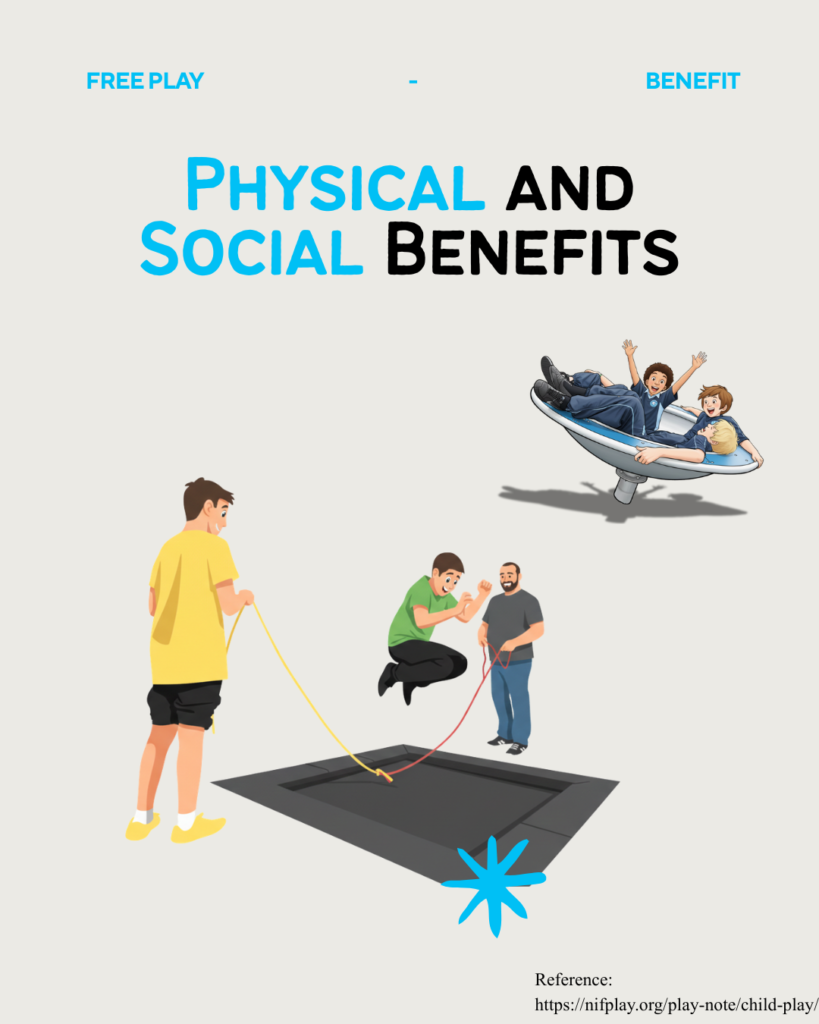
Free play, especially outdoors, delivers significant physical advantages. Climbing, balancing, running and rough-and-tumble play improve:
- Gross and fine motor skills
- Coordination and spatial awareness
- Physical strength and endurance
Outdoor play has also been linked to stronger academic outcomes and enhanced social competence. Natural environments provide varied sensory experiences that stimulate curiosity and creativity, while unstructured social interactions teach negotiation, compromise and cooperation.
Rough-and-tumble play, often misunderstood, can be particularly beneficial. When consensual and supervised appropriately, it helps children practise emotional regulation, learn boundaries and develop trust.
Cultural and Adaptive Relevance

Play reflects the values, stories and social norms of a child’s community. Through sociodramatic play, in which pretending to be teachers, shopkeepers, parents or superheroes, children explore social roles and rehearse real-world scenarios.
This type of play strengthens:
- Understanding of social expectations
- Negotiation and conflict resolution skills
- Cultural awareness and adaptability
By acting out different perspectives, children build empathy and learn to interpret social cues. They become more socially aware and better equipped to navigate diverse environments.
Cognitive Growth Through Creativity
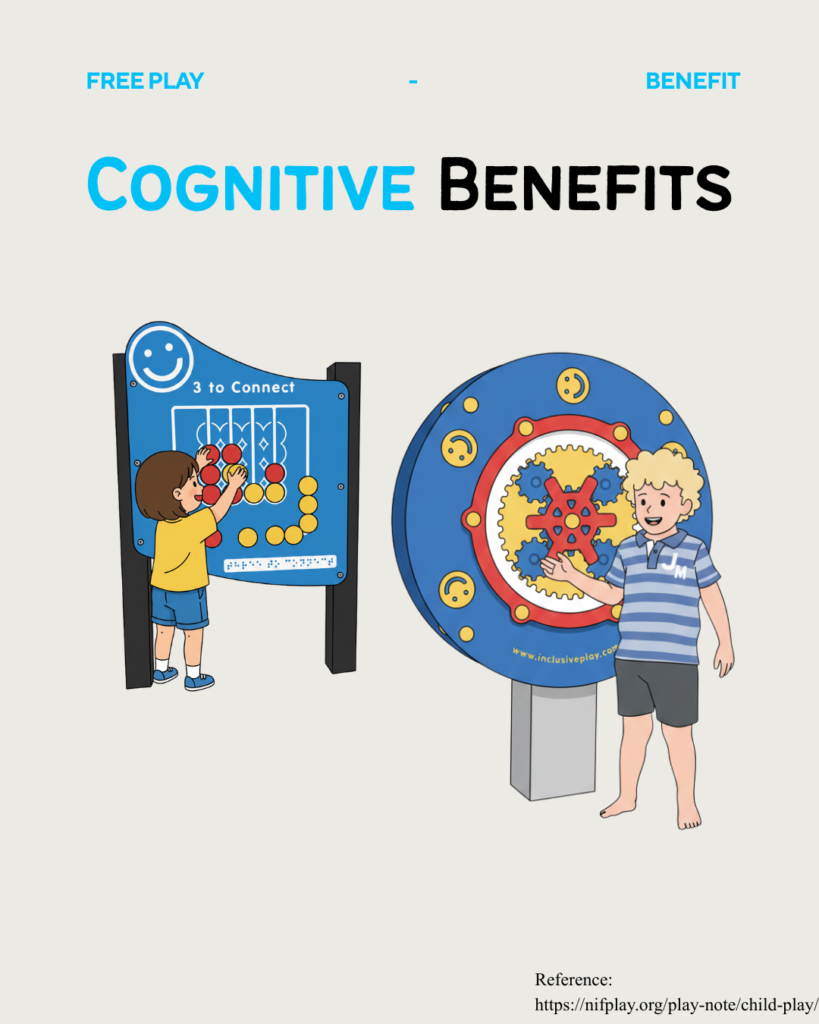
Free play is fertile ground for cognitive development. Without rigid rules or predetermined outcomes, children experiment freely. A roundabout becomes a spaceship; a stick becomes a magic wand.
Such imaginative transformations nurture:
- Creative thinking
- Hypothesis testing
- Critical reasoning
- Flexible problem-solving
Children constantly evaluate what works and what does not, adjusting strategies accordingly. These experiences strengthen executive functioning and promote intellectual independence.
Importantly, play-driven learning tends to be deeper and more enduring because it is fuelled by intrinsic motivation rather than external pressure.
Social and Emotional Resilience

Pretend play offers a safe space to explore big emotions. Children can process fears, frustrations and hopes by projecting them onto characters and scenarios.
In doing so, they practise:
- Emotional regulation
- Perspective-taking
- Empathy
- Relationship management
Through play, children learn that disagreements can be resolved, roles can change and problems can be overcome. This fosters emotional resilience — the ability to adapt and recover from difficulties.
Doing Your Part
Free play is far more than children passing time or taking a break from structured learning. It is a fundamental and crucial component of human development. It shapes the brain, strengthens the body, nurtures relationships and builds the psychological foundations for lifelong wellbeing.
Everyone has a role to play in protecting and promoting it.
Parents, educators, community leaders and designers must ensure that children have access to environments where free play can flourish. Playgrounds and community spaces should offer inclusive design and equipment that invite participation from children of all abilities, backgrounds and interests.
When we create spaces that encourage exploration, imagination and connection, we are not simply providing entertainment. We are investing in healthier, more capable and more compassionate future generations.
Free play is not optional. It is essential.